Qwen 3.6 27B API Pricing: Why Token Billing Is Killing Your Budget
Qwen 3.6 27B API Pricing: Why Token Billing Is Killing Your Budget
1. The Shocking AI Bill at Month-End
Alibaba's Qwen 3.6 27B is a fantastic AI model. It has world-class logic, incredible coding accuracy, and multilingual features that make it a favorite for modern businesses. I genuinely love this model.
But here is the problem most teams discover too late.
Most developers do not host large AI models themselves. Instead, they link their apps to standard cloud providers that charge a small fee for every token processed.
What is a token? In simple terms, a token is just a piece of a word — roughly 4 characters. The word "hello" is 1 token. The sentence "How are you today?" is about 5 tokens.
On paper, per-token pricing looks cheap. A few pennies for a thousand words? That sounds fine.
But here is the trap. While per-token pricing looks cheap at first, it hides a compounding cost trap that quietly destroys software budgets as your user base grows.
Warning: Token billing is like a restaurant that charges you a small fee for every single ingredient you bring into the kitchen before the chef even starts cooking your meal. By the time your meal arrives, you have paid for the ingredients three times over.
Let me show you exactly why.
2. The Two Hidden Budget Killers in Token Pricing
The Input Tax (The Chat History Trap)
Here is a dirty secret about most AI assistants. They cannot remember what you said two minutes ago unless you send the entire chat history back into the API with every single new message.
Let me give you a real example:
A customer support conversation:
- Message 1: "Where is my order #8821?" (10 tokens)
- Message 2: "It says delivered but I don't have it" (15 tokens)
- Message 3: "Can you check with the shipping company?" (12 tokens)
- Message 4: "I need a refund if it is lost" (10 tokens)
Here is what actually happens behind the scenes:
| Turn | What You Send | Total Tokens Billed |
|---|---|---|
| Turn 1 | Message 1 | 10 tokens |
| Turn 2 | Message 1 + Message 2 | 25 tokens |
| Turn 3 | Message 1 + Message 2 + Message 3 | 37 tokens |
| Turn 4 | Message 1 + Message 2 + Message 3 + Message 4 | 47 tokens |
You are paying the provider to read the exact same early messages over and over again. By turn 4, you have paid for Message 1 four separate times.
Now imagine a long, detailed 15-minute conversation with 30 back-and-forth messages. You are paying for the same opening message 30 times. The tax compounds with every single turn.
The Math: A 30-turn conversation that should cost $0.15 actually costs $2.50 because of the input tax. That is 16x more expensive than it needs to be.
The Agent Loop Explosion (The Multi-Step Thinking Tax)
Modern AI is not just about simple chatbots anymore. Businesses build autonomous agents and coding bots that work continuously.
Here is what happens with an autonomous agent:
- You ask: "Find all customer refund requests from last week and draft responses"
- The agent searches the database (1 hidden call)
- The agent reads each refund request (5 hidden calls)
- The agent drafts responses (5 hidden calls)
- The agent checks the responses for quality (1 hidden call)
- The agent formats the output (1 hidden call)
One user request triggered 13 hidden background prompts. A simple question that should cost $0.01 actually costs $0.13. Do that 10,000 times per day, and you are burning $1,300 daily.
The Agent Tax: Modern autonomous agents can trigger 20 to 50 hidden API calls for every single user request. Your token usage spirals out of control in minutes, not hours.
3. Comparing the Math: Token Fees vs Flat Compute
Now let me show you exactly how much money you are losing.
| Your Daily App Traffic Level | Pay-Per-Token API Model Cost | OpenLLM Buddy Flat Compute Cost | Real Budget Impact |
|---|---|---|---|
| Testing Stage (1 internal developer) | ~$3.00 to $8.00 / day | ~$0.50 / hour (Only when active) | Safe and highly predictable |
| Light Production (Regular business users, 1,000 requests/day) | ~$40.00 / day | ~$0.50 / hour flat rate | Saves your company ~$1,000 / month |
| Heavy Automation (Continuous agent loops, 10,000 requests/day) | $120.00+ / day | Strictly $0.50 / hour flat rate | Saves your company thousands / month |
Let Me Show You the Annual Math
Pay-per-token API for Heavy Automation:
- $120 per day × 30 days = $3,600 per month
- $3,600 × 12 months = $43,200 per year
OpenLLM Buddy flat compute for Heavy Automation:
- GPU running 24/7 = 24 hours × $0.50 = $12 per day
- $12 × 30 days = $360 per month
- $360 × 12 months = $4,320 per year
You save $38,880 per year. That is a full-time junior developer. That is a marketing budget. That is years of extra runway for your startup.
The Bottom Line: Switching from variable word-counting costs to a single, predictable flat rate for raw server time makes your token costs disappear completely. Your token usage becomes 100% FREE.
4. Why Self-Hosting on Your Own Laptop Fails
I know what some of you are thinking. "Why not just buy a local computer to run Qwen 3.6 27B for free?"
I love the idea. But here is the reality.
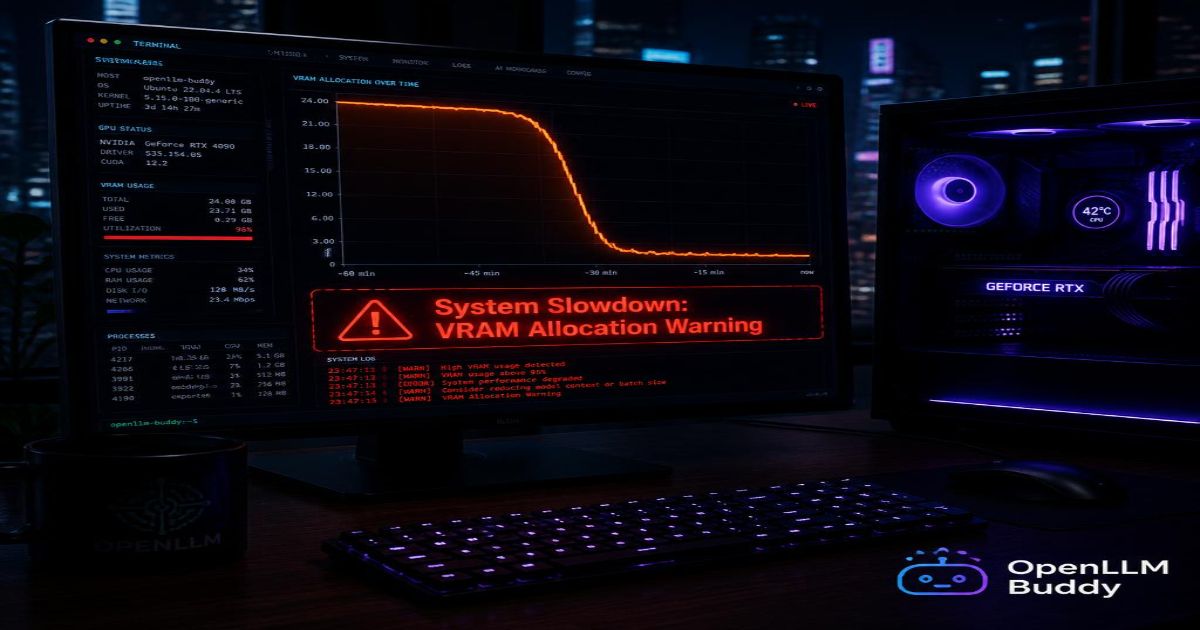
The VRAM Wall
To run a massive 27-billion parameter model at full speed, you need a high-end desktop graphics card with at least 24GB of VRAM. The cheapest options are:
- NVIDIA RTX 3090 (used): $1,200
- NVIDIA RTX 4090 (new): $1,600
- NVIDIA RTX 5090 (newest): $2,000+
Standard office laptops have 4GB to 8GB of VRAM. They simply do not have the memory capacity. Your laptop will crash before the model even finishes loading.
The Maintenance Headache
Even if you buy the expensive hardware, now you have new problems:
- You need to learn complex tools like
vLLMorllama.cpp(days of learning) - You need to open network tunnels so your team can access the server (security risk)
- You need to monitor the server 24/7 for crashes or memory leaks
- You need to pay for electricity — running an RTX 4090 24/7 costs about $30-50 per month
- You need to deal with heat — your office will get noticeably warmer
The Self-Hosting Reality: By the time you buy the hardware, learn the tools, and maintain the server, you have spent $2,000+ and wasted 40 hours of engineering time. That is not free. That is expensive in a different way.
5. Predictable Growth: Flat-Rate Infrastructure with OpenLLM Buddy
This is where OpenLLM Buddy solves everything.
We let you stop worrying about word counts. We host uncompressed, top-quality open weights like Qwen 3.6 27B for you on high-performance cloud graphics card networks. Our infrastructure includes:
- Premium NVIDIA RTX 4090 and next-gen RTX 5090 systems
- Running on high-speed RunPod compute nodes
- Enterprise-grade cooling, power, and security
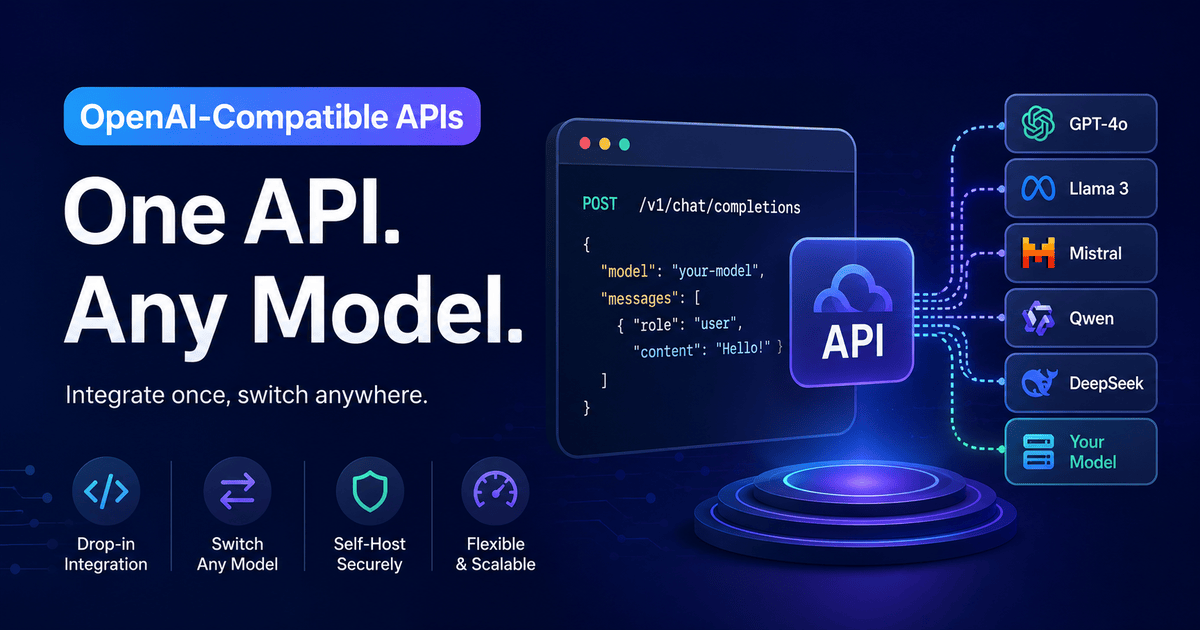
You get an instant, OpenAI-compatible API link. No hardware to buy. No servers to maintain. No security risks to manage.
The Core Value Proposition
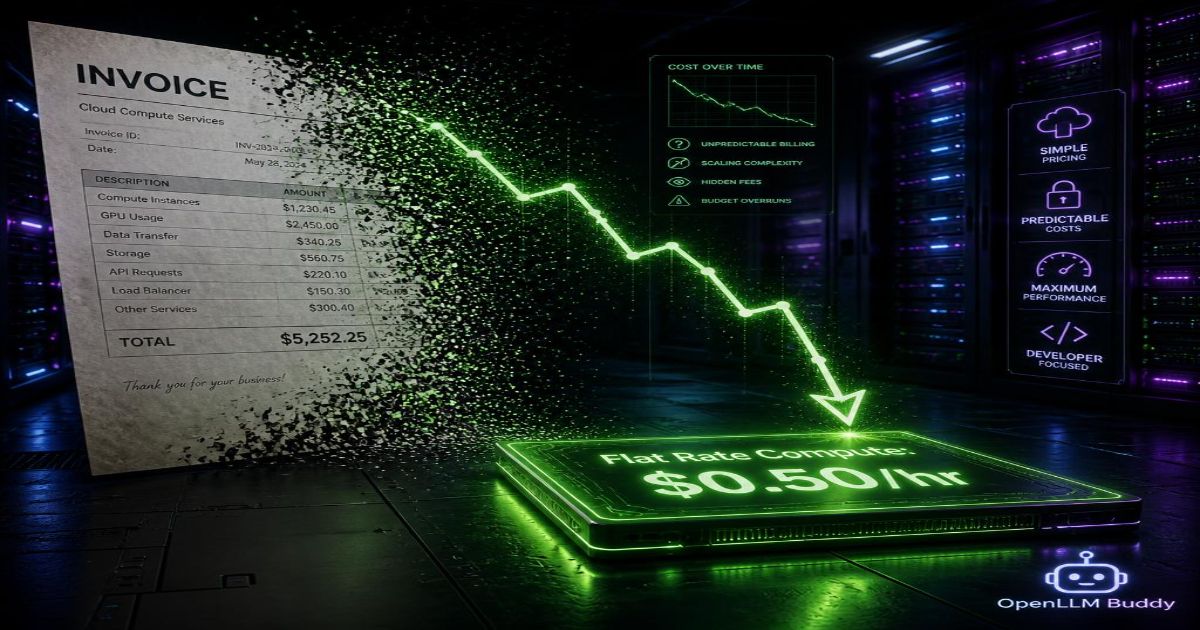
We completely remove token meters and surprise bills. We only charge your team a tiny flat rate of $0.50 per hour for the raw minutes our cloud hardware is spinning. Your input tokens, output tokens, and long text documents are entirely FREE.
| Pricing Feature | Traditional API | OpenLLM Buddy |
|---|---|---|
| Input tokens | $3–15 per million | $0 |
| Output tokens | $15–60 per million | $0 |
| Chat history re-reading tax | Yes (compounds) | $0 |
| Agent loop hidden calls | Yes (explodes) | $0 |
| GPU compute | N/A | $0.50/hour |
Switch Your App in Seconds
Here is how easy it is to move your app from expensive token billing to predictable flat-rate compute:
import openai

# OLD WAY: Paying for every single word
# client = openai.OpenAI(
#     base_url="https://api.openai.com/v1",
#     api_key="sk-proj-..."
# )

# NEW WAY: Stop paying for tokens. Switch to predictable flat-rate cloud compute.
client = openai.OpenAI(
    base_url="https://api.openllmbuddy.cloud/v1",
    api_key="YOUR_OPENLLM_BUDDY_KEY"
)

# Your code stays exactly the same
response = client.chat.completions.create(
    model="qwen-3.6-27b",
    messages=[
        {"role": "system", "content": "You are a helpful customer support assistant."},
        {"role": "user", "content": "Help this customer track their missing order."}
    ]
)

print(response.choices[0].message.content)
That is it. One change to your base_url. Your token bills disappear forever.
Simple, Predictable Pricing
| Plan | Price | Hourly Rate | Best For |
|---|---|---|---|
| 11 hours | $10 | ~$0.90/hr | Testing and prototyping |
| 24 hours | $22 | ~$0.92/hr | One day of active development |
| 1 week | $150 | ~$0.89/hr | One sprint (5-7 days) |
| 1 month | $599 | ~$0.83/hr | Production workflow, 24/7 |
Your AI can handle 1,000 requests or 100,000 requests. The price does not change. You pay only for the time the GPU is running.
The Bottom Line
Token billing is killing your budget. The input tax and the agent loop explosion make simple AI features 10x to 50x more expensive than they should be.
You have three choices:
- Stay with per-token APIs and watch your bills explode as you grow
- Buy expensive hardware and self-host — spending $2,000+ and 40+ engineering hours
- Switch to OpenLLM Buddy — flat-rate compute at $0.50/hour, tokens 100% free
The choice is clear.
Start your journey at openllmbuddy.cloud
Escape the token tax today.