Running Qwen 3.6 27B on RunPod vs Lambda Labs vs Vast.ai: The Ultimate Cloud Showdown
Running Qwen 3.6 27B on RunPod vs Lambda Labs vs Vast.ai: The Ultimate Cloud Showdown
1. The Cloud Server Dilemma for Large AI
Alibaba's Qwen 3.6 27B is a world-class AI model. It writes code, answers questions, and reasons through complex problems brilliantly.
But here is the problem. Qwen 3.6 27B is a dense model. That means it uses 100% of its brain power on every single word it types. Unlike Mixture-of-Experts models that sleep most of their brain cells, Qwen stays fully awake. This requires a premium graphics card with at least 24GB of VRAM to run fast.
The most popular consumer card for this job is the NVIDIA RTX 4090. But a new RTX 4090 costs about $1,600. Most developers do not have that kind of cash sitting around.
So instead, they turn to the cloud. You can rent an RTX 4090 by the hour. No upfront hardware cost. No loud fans in your bedroom.
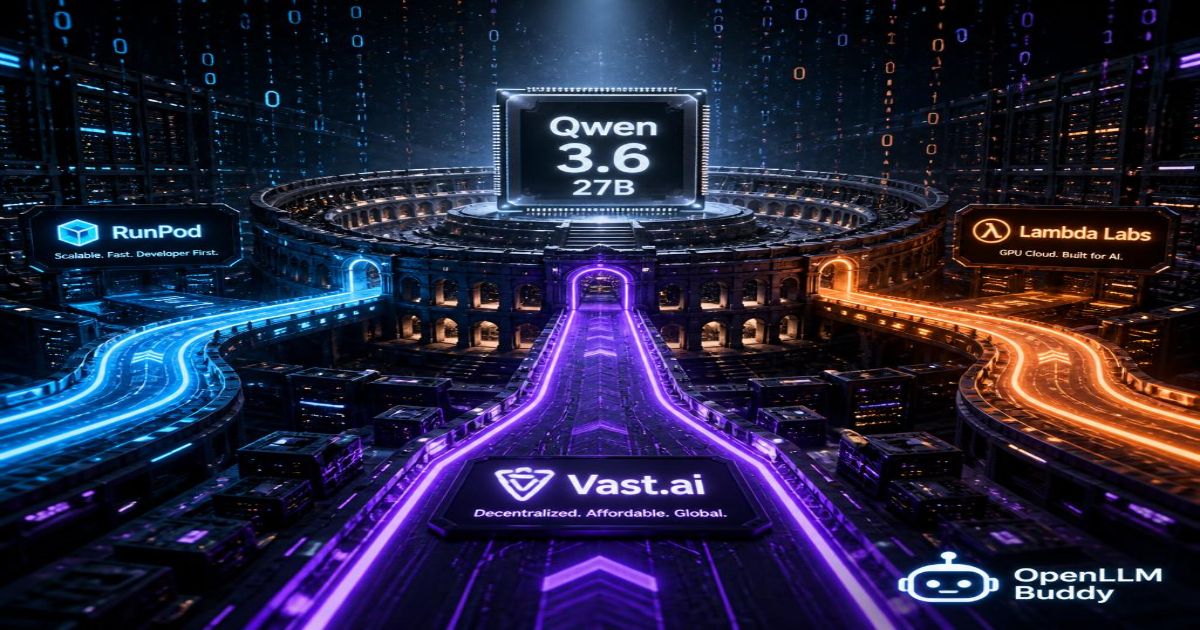
But which cloud platform is best? RunPod? Lambda Labs? Vast.ai?
I tested all three. I ran Qwen 3.6 27B on each platform. Here is exactly what I found.
What is an SSH key? An SSH key is just like a secure digital fingerprint that lets your laptop knock on the cloud server's door and log in automatically without typing a messy password every five minutes. It sounds technical, but most platforms generate one for you automatically.
2. Head-to-Head: Comparing the Platforms
RunPod (The Developer Favorite)
RunPod is incredibly popular for one reason: it lets you launch a pre-configured AI environment (they call it a "Pod") in just three clicks. You do not need to be a Linux expert.
How it works: You select your GPU (like an RTX 4090), choose a template (they have one with vLLM and Python pre-installed), and click "Deploy." About 60 seconds later, you have a running server.
Pros:
- Extremely easy to use (great for beginners)
- Pre-configured templates save hours of setup time
- Excellent customer support and active community
- Servers are stable and rarely crash
- You can save server "snapshots" to restore later
Cons:
- Slightly more expensive than the cheapest options
- Popular GPU models can sell out during peak hours
Best For: Fast testing, production apps, and developers who want to focus on coding, not server setup.
Lambda Labs (The Enterprise Choice)
Lambda Labs runs a premium, high-end data center network. They do not offer cheap consumer cards. Instead, they offer massive enterprise chips like the NVIDIA A100 (40GB/80GB) and H100.
How it works: You create an account, request GPU access (they sometimes have waitlists), and launch an instance. The servers are top quality.
Pros:
- Extremely reliable (almost zero downtime)
- Massive enterprise GPUs available (A100, H100)
- Great for large-batch processing or training models
- Professional support for businesses
Cons:
- Expensive. RTX 4090s cost over $1.20 per hour (much higher than competitors)
- Often hard to find available GPUs (long waitlists)
- Overkill for simple inference workloads
- Requires more technical setup knowledge
Best For: Corporate teams, research labs, and anyone who needs enterprise-grade reliability and has the budget for it.
Vast.ai (The Ultra-Cheap Wildcard)
Vast.ai is different. It is a peer-to-peer marketplace. You are renting graphics cards from random individuals around the world who have set up server rigs in their homes or offices. Some are hobbyists. Some are small businesses.
How it works: You browse listings, pick a GPU from a specific host, and rent their machine. Prices change constantly based on supply and demand.
Pros:
- By far the cheapest option. RTX 4090s often cost $0.40 to $0.55 per hour.
- Huge variety of hardware available
- Great for batch jobs that can tolerate interruptions
Cons:
- Servers can disappear suddenly. If a host unplugs their machine or loses power, your server goes offline. No warning.
- Requires manual setup (you build everything from scratch)
- Inconsistent performance depending on the host's internet connection
- Higher risk of security issues (you are renting from strangers)
Warning: Vast.ai is perfect for cheap experiments and non-critical batch jobs. But for a live customer-facing app? The risk of sudden downtime is too high. Your chatbot will stop working at 2 AM because someone's landlord turned off the power.
3. The Cloud Scorecard: Price vs. Stability
Here is a quick reference table to help you decide:
| Cloud GPU Provider | Average RTX 4090 Hourly Rate | Server Reliability Level | Setup Ease for Beginners | Best Used For |
|---|---|---|---|---|
| RunPod | ~$0.74 to $0.79 / hour | Very High | Extremely Easy (3 clicks) | Fast testing and scaling apps |
| Lambda Labs | ~$1.20+ / hour (Enterprise Class) | Perfect | Moderate | Corporate data teams and stable runs |
| Vast.ai | ~$0.40 to $0.55 / hour | Moderate (Risky) | Harder (Needs manual terminal skills) | Cheap background experiments |
My Honest Recommendation
- For production apps that need 99% uptime: Choose RunPod. It is the best balance of price, stability, and ease of use.
- For enterprise teams with budget: Choose Lambda Labs if you need A100/H100 power.
- For cheap experiments and batch jobs: Choose Vast.ai — but do not run customer traffic on it.
4. The Hidden Overhead: The Setup and Configuration Nightmare
Here is the problem that none of these platforms tell you about.
When you rent a raw cloud server from RunPod, Lambda Labs, or Vast.ai, you pay for every single minute the computer is turned on. And you waste a lot of those minutes just setting things up.
The Idle Cash Leak
Here is what happens on your first day with a rented server:
| Time | Activity | Cost |
|---|---|---|
| 0:00 - 0:15 | SSH into server, update packages | $0.12 |
| 0:15 - 0:30 | Install Python, CUDA drivers, vLLM | $0.12 |
| 0:30 - 1:00 | Download Qwen 3.6 27B model (16GB file) | $0.25 |
| 1:00 - 1:30 | Debug configuration errors, restart services | $0.25 |
| 1:30 - 2:00 | Test the API, fix port forwarding | $0.25 |
You just spent $0.99 in server time before running a single production request. Do this setup five times over a month, and you have wasted $5+ on idle configuration time.
The Complex Network Barrier
Turning a raw rented server into a secure, live web address that your app can safely talk to requires:
- Opening specific network ports (like port 8000)
- Configuring firewall rules to block hackers
- Setting up API authentication tokens
- Figuring out your server's public IP address
- Handling HTTPS/SSL certificates for secure connections
If you turn off the machine to save money, many platforms wipe your data. The next morning, you start from scratch. Download the model again. Reinstall the packages. Reopen the ports.
The Setup Tax: Most developers spend 30-40% of their cloud GPU budget just configuring and maintaining servers. That is money spent on frustration, not on running your AI.
5. Skip the Configuration Hassle: Instant Token-Free Cloud with OpenLLM Buddy
This is where OpenLLM Buddy completely changes the game.
We eliminate the frustration of managing raw server nodes. Instead of forcing you to configure Linux environments, open network ports, or watch hourly server rental clocks tick up while you debug code, OpenLLM Buddy sets up everything for you instantly.
What We Do Behind the Scenes
We run uncompressed, full-precision open weights like Qwen 3.6 27B on elite cloud graphics networks. Our infrastructure includes:
- Top-tier NVIDIA RTX 4090 and next-gen RTX 5090 systems
- Powered by blazing-fast RunPod compute nodes
- Enterprise-grade security, firewalls, and SSL certificates
- 24/7 monitoring to ensure your endpoint stays online
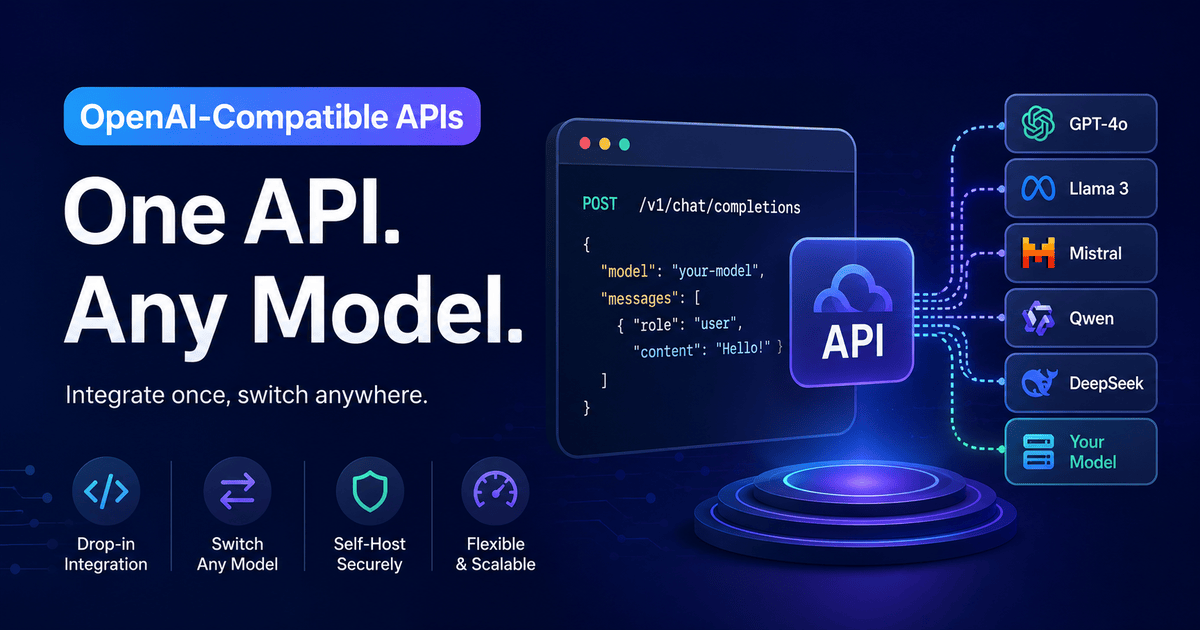
You get an instant, secure, OpenAI-compatible API link. No SSH. No port forwarding. No re-downloading models. Just a URL and a key.
Our Disruptive Value Proposition
We don't watch your word counts, and we don't make you manage raw Linux terminals. We only charge your company a tiny, flat rate of $0.50 per hour for the raw minutes our optimized cloud hardware is actively spinning. All your input tokens, output tokens, and heavy automated agent loops are 100% FREE.
| Cost Factor | Raw RunPod/Lambda/Vast | OpenLLM Buddy |
|---|---|---|
| Server setup time | 1-2 hours (wasted) | Zero seconds |
| Model downloading | 15-30 minutes (each time) | Zero seconds |
| Port forwarding & firewalls | Manual (frustrating) | Automatic |
| Token fees | $15-60 per million | $0 |
| Hourly GPU rate | $0.40 - $1.20+ | $0.50 |
| Data persistence | Often wiped on shutdown | Automatic |
Connect Your App in Seconds
Here is how easy it is to switch from raw cloud servers to OpenLLM Buddy:
import openai

# Stop configuring raw servers and switch to an optimized, flat-rate $0.50/hr cloud endpoint
client = openai.OpenAI(
    base_url="https://api.openllmbuddy.cloud/v1",
    api_key="YOUR_OPENLLM_BUDDY_KEY"
)

# Your app code stays exactly the same
response = client.chat.completions.create(
    model="qwen-3.6-27b",
    messages=[
        {"role": "system", "content": "You are a helpful coding assistant."},
        {"role": "user", "content": "Review this Python function for performance issues."}
    ]
)

print(response.choices[0].message.content)
That is it. No SSH. No package installs. No port forwarding. No model downloads. Just a working API endpoint.
The Ultimate Freedom
With OpenLLM Buddy, you can:
- Scale your software feature to thousands of users without worrying about server capacity
- Process massive text documents (like 200-page reports) without worrying about context windows or token fees
- Let your background software run 24/7 without paying idle setup time or worrying about servers wiping data
- Never debug a terminal error again — we handle all the infrastructure
The Bottom Line
| If you want... | Choose... |
|---|---|
| Cheap experiments and batch jobs | Vast.ai (but accept the downtime risk) |
| Enterprise-grade A100/H100 power | Lambda Labs (if you have the budget) |
| Balanced price + stability + ease | RunPod (but you still configure everything) |
| Zero configuration + zero token fees | OpenLLM Buddy |
Stop renting raw servers and wasting hours on setup. Start using OpenLLM Buddy.
Activate your pre-optimized Qwen 3.6 27B API endpoint at openllmbuddy.cloud
Just instant, affordable AI infrastructure.